Laura Wingfield
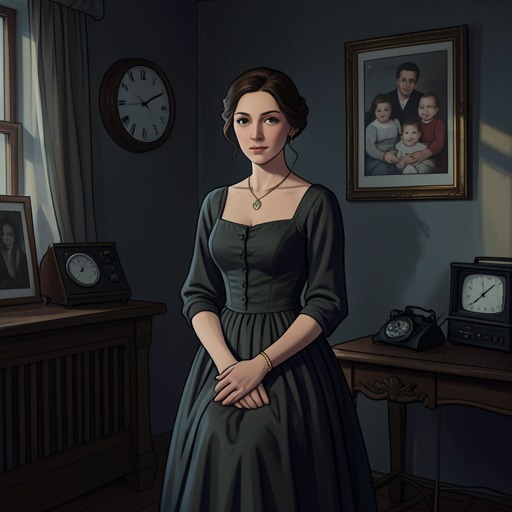
The Glass MenagerieLaura Wingfield is the daughter of Amanda Wingfield and the sister of Tom Wingfield, whose memory frames the play. A childhood illness left her with one leg slightly shorter than the other and held in a brace. Her life is consequently marked by difficulty entering ordinary social and educational spaces, but also by interests and perceptions that do not reduce to her disability. The glass animals she washes and polishes are objects of sustained care; the play’s central image of her as fragile, like one of those ornaments, is powerful precisely because it can both express her isolation and risk defining her by it.
Identity and Physical Experience
The play’s opening character description says that Laura’s separation grows from a childhood illness until she seems like a piece of her own glass collection, too delicate to move from the shelf. This is a description of how the drama frames her, not a measure of her whole identity. Her leg brace is a concrete part of her daily experience: at Soldan High School, climbing the stairs was difficult, and the brace clumped loudly enough to her that walking into class felt like entering under a storm of attention. When she recalls that sound, she says it seemed like thunder to her, although Jim O’Connor remembers never hearing it.
That contrast makes the gap between bodily difference and its social meaning especially clear. Jim argues that Laura’s sense of the clumping magnified a slight physical defect and connects her low confidence to leaving school. His interpretation offers encouragement, but it also risks explaining a material difficulty chiefly as a problem of imagination. Laura’s account preserves something his assessment cannot erase: the brace affected how she moved through a public building, and the sound she feared shaped her experience whether or not others noticed it.
Education, Withdrawal, and Household Pressures
After her mother arranged for her to attend Rubicam’s Business College, Laura could not manage the course. She says that she became ill on the floor and could not face returning. Rather than tell Amanda directly that she had stopped attending, she spent the day walking around the park and going into places to get warm, allowing her mother to believe she was still at school. The concealment prolonged the gap between what Amanda planned for her and what Laura could bear to do.
Amanda’s discovery is bound up with the family’s limited prospects. She recalls that the tuition cost fifty dollars and mourns the loss of her plans and ambitions for her daughter. She then imagines a future of dependency for unmarried women without careers, describing the prospect of being supported reluctantly by relatives and having no home of their own. Her fear is not simply disappointment in Laura: it reflects the economic insecurity of the household and the few alternatives Amanda can see. Yet the pressure to pursue a business career has already met Laura’s distress, leaving mother and daughter facing a future neither has solved.
The family’s finances recur in ordinary obligations as well as larger arguments. Amanda reminds Tom of a light bill for which they have received notices, while he complains that his warehouse wage of sixty-five dollars a month binds him to work he resents. These pressures help explain why Laura’s independence carries such weight in the household: Amanda fears that without a career or marriage her daughter will depend on relatives, while the family has no evident financial margin to make that dependence secure.
Glass Animals and the Name Blue Roses
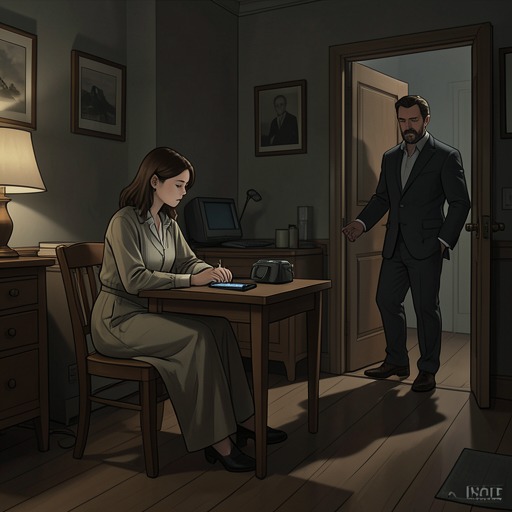
Laura’s glass collection gives her a private activity within a life otherwise narrowed by retreat. At the beginning of Scene Two, she sits in a delicate ivory chair at a small claw-foot table, washing and polishing the ornaments. When she hears Amanda approaching, she pushes the bowl of glass aside and sits stiffly before a typewriter-keyboard diagram, as if absorbed in it. The gesture reveals both her attachment to the collection and her awareness that Amanda expects her to be occupied with business training. The ornaments are not merely a decorative emblem: they are things Laura handles, arranges, and cares for, in contrast to the course she could not continue.
Her recollection of Jim also supplies an identity not founded on her physical condition. They sat across the aisle from one another at school on Mondays, Wednesdays, and Fridays. Jim sang in the senior-class operetta and won a silver cup for debating; Laura remembers his grin and says that he used to call her Blue Roses. The nickname remains unexplained in the evidence here, but its return gives her school years a personal connection and a name distinct from the vocabulary of defect and incapacity. When Amanda recognizes that Jim is the caller she has in mind, Laura sways, catches a chair, and faintly says, Not — Jim! The reaction shows how strongly his name unsettles her, without establishing what she expects from his visit.
When Jim asks what she means by her collection, Laura explains that it consists mostly of tiny glass animals, which Amanda calls a glass menagerie. She offers him one of the oldest ornaments as an example and says it is nearly thirteen years old. The scene gives her a moment of initiative: she turns from embarrassment toward an object she knows well and chooses to show it. Her collection’s importance lies not only in its resemblance to her own supposed fragility but in the knowledge and care Laura can bring to it.
Relationships and Interpretations
Laura’s relationship with Amanda is shaped by care, fear, and incompatible accounts of what Laura can do. Amanda reacts to the failed business course by grieving the tuition and the future she had planned; she later insists that Laura should not call herself crippled, preferring to describe her condition as a slight defect and urging her to cultivate charm and vivacity. The correction is intended to reassure, but it also redirects Laura’s description of herself into a more acceptable one. Laura names the physical difference plainly; Amanda answers with an account centered on how Laura might compensate for it.
Jim offers a different explanation when he identifies lack of confidence as Laura’s principal difficulty. He recalls his own earlier insecurity and credits public speaking, science, and disciplined study with changing his view of himself. He points to Laura’s decision to leave school as evidence that fear of being noticed had governed her choice. His advice imagines self-confidence as something she might develop, while Laura’s recollections foreground the concrete strain of movement, public attention, and illness. Their exchange therefore places encouragement beside a genuine difference in perspective: Jim can urge her to reinterpret the obstacle, but he cannot make her past experience unreal.
Tom’s narration adds another pressure to Laura’s place in the family. He describes himself as a poet employed in a warehouse and says that escaping his trap requires him to act without pity. During a quarrel with Amanda, he insists that his job supports the family and points to his absent father’s photograph as the example of someone who is gone. The exchange does not give Laura a speech in that dispute, but it establishes the financial and emotional conflict surrounding her: Amanda fears losing the security Tom’s wages provide, while Tom resents being made responsible for a life he did not choose. Their conflict makes the question of Laura’s future part of a household crisis, not an isolated personal problem.
Narrative Role and Significance
Laura is presented through a memory play that Tom describes as dimly lit, sentimental, and not realistic, with music accompanying what memory brings back. That form matters to her characterization. The blue roses on the screen, the music, and the polished glass collection make her story available through recurring images and gestures rather than through a comprehensive account of life beyond the remembered scenes. The result can invite tenderness, but it also means that her inner life reaches the audience through Tom’s framing and through other characters’ interpretations.
The play’s language repeatedly links Laura to glass and stillness, while its concrete details show an active person negotiating movement, schooling, concealment, and social expectation. She washes the ornaments, remembers specific school days, describes the brace that made the stairs difficult, and offers Jim an object from the collection. These actions complicate the image of someone simply too fragile to move. At the same time, neither Jim’s confidence-building advice nor Amanda’s insistence that the disability is hardly noticeable resolves the material and emotional limits Laura describes. Her significance lies in that tension: the drama makes her vulnerability central, yet its most revealing moments also show how much of her experience is lost when others turn it into a diagnosis, a family plan, or a beautiful emblem.